 English
 Afrikaans
 Dutch
Dutch French
 German
 Italian
 Spanish
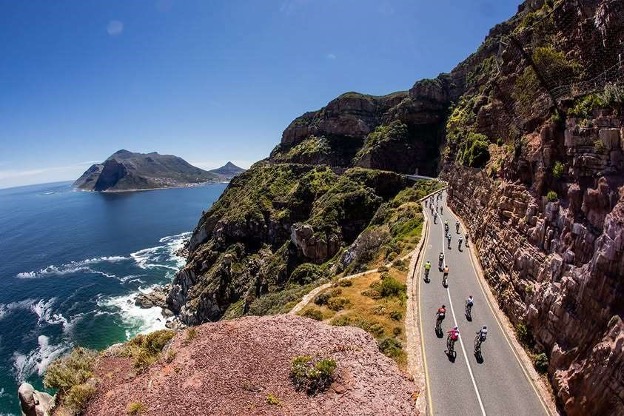
Photo credit: Cape Town Cycle Tour via Facebook
Since it commenced in 1978, the Cape Town Cycle Tour has been an iconic part of Cape
Town’s annual history.
Originally called ‘The Big Ride In’ and organised by Bill Mylrea and John Stegmann to “highlight the need for cycling infrastructure”, over time, this race has become a popular, mass event that often sees some 30 000 cyclists partaking (a far cry from the original 500 or so participants).
In this post, we share the history and magic behind this special race:
How It All Began: The Cape Town Cycle Tour
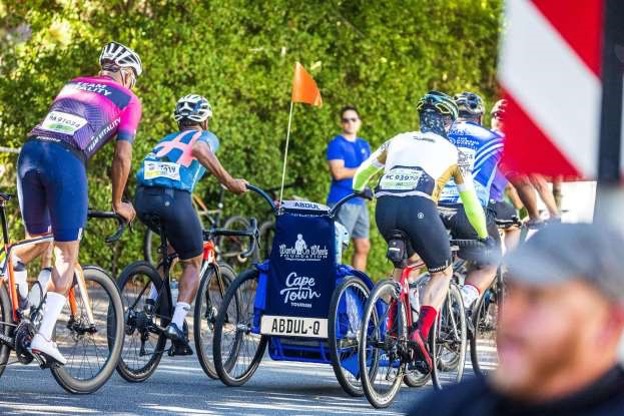
Photo credit: Cape Town Cycle Tour via Facebook
We mentioned previously that the race began in 1978 but we didn’t really explain why it was created. In essence, this race began as a protest ride that saw cyclists advocating for safer cycling paths in the Mother City.
While it was met with early government resistance and has faced some challenges along the way, it has grown into a powerful, annual event on the Cape Town calendar.
Over the years, the route has changed several times (it was initially meant to pass through Cape Point Nature Reserve), while also breaking important political- and social-barriers.
For example, it was non-segregated during Apartheid, which meant that cyclists of all races and skin colours were free to participate. It was also the first event to allow both amateur- and professional-cyclists to compete on the same course.
Today, the race is apparently the “largest timed cycling event in the world” and draws some 30 000 riders annually.
And while things have changed over the years, the goal remains the same: to promote a healthy, active lifestyle; to provide community upliftment and to aid with overall cycling development.
This year, the race, which is set to take place on 9 March 2025, celebrates its 47th edition, proving that it remains a key fixture in the global cycling calendar.
The Magic of the Cycle Tour: How It Gives Back
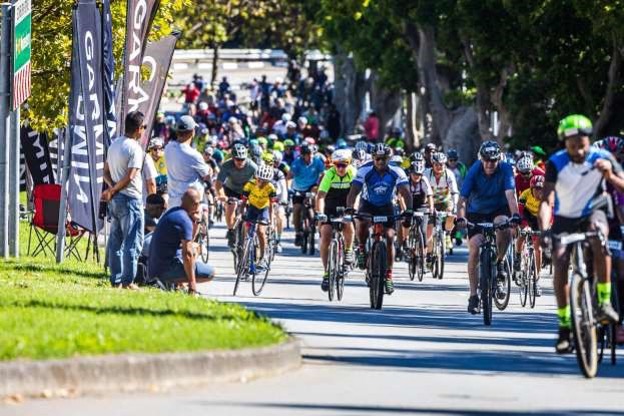
Photo credit: Cape Town Cycle Tour via Facebook
Thanks to the Cape Town Cycle Tour’s success, the Cape Town Cycle Tour Trust is able to fund two beneficiaries: namely, the Pedal Power Association and the Rotary Club of Claremont.
These two organisations then use the excess funds to support local social upliftment projects, which are aimed at promoting cycling development and incorporating safe cycling initiatives.
So far, with the help of the Cape Town Cycle Tour, over R130 million has been donated to charities. This is another special way that the race makes a positive, lasting impact on our local communities and the South African cycling landscape as a whole!
Choosing Which Race Route to Ride
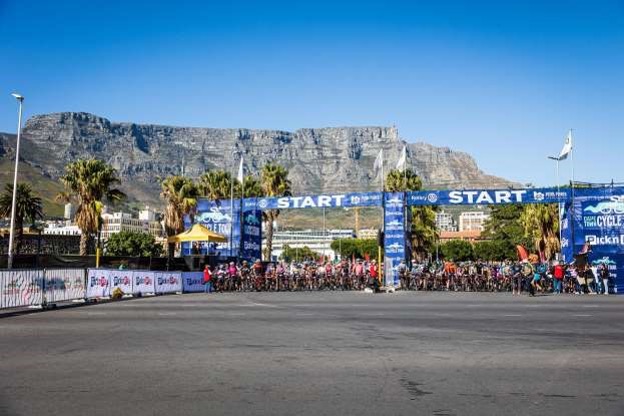
Photo credit: Cape Town Cycle Tour via Facebook
While the Cape Town Cycle Tour is famously a 109-kilometre route, in 2023, a newer, 42kilometre route was introduced into the mix, with great success!
This shorter route is ideal for a wider range of cyclists, including beginners, junior riders or just anyone who isn’t quite ready for the full 109-kilometre route yet.
The 42-kilometre route may be shorter but it still packs a punch and offers the same thrilling feeling of being able to ride fully closed roads, while also enjoying some of Cape Town’s spectacular scenery as you ride!
For full route details, please see here on their website:
https://www.capetowncycletour.com/events/the-42km-cape-town-cycle-tour.
Alternatively, if you’re a die-hard cycling enthusiast or professional rider, then the iconic, 109kilometre route is ideal for you. It enjoys a vibrant start in the city, before making its way along the Cape Peninsula, hugging the ocean on one side and our imposing mountains and cliffs on the other.
The ride starts near the Cape Town Castle before finally finishing back in Sea Point.
Along the way, you’ll ride along or past Nelson Mandela Boulevard, UCT, Newlands Forest, Simonstown, Chapman’s Peak, Hout Bay and of course, Camps Bay and Clifton into Sea Point.
For full route details, please see here on their website:
https://www.capetowncycletour.com/events/the-cape-town-cycle-tour.
The Effect on and Support from Hout Bay and Surrounds
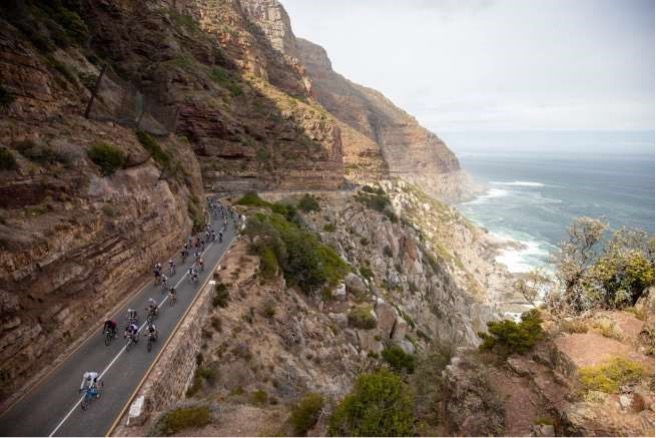
Photo credit: Cape Town Cycle Tour via Facebook
It’s true that the race essentially brings parts of our city, including Hout Bay, to something of a grinding halt (especially on the traffic front) but it’s also a unique and fun way for people to come together and support or watch this incredible race in-person. And honestly, the cheering crowds are one of the best aspects of this race!
The main spectator spots include Wynberg Hill; anywhere along the M3 (but especially towards Tokai); alongside the seaside locations of Muizenberg and Kalk Bay; or even along the back half of the route, which includes spots like Noordhoek Farm Village, Hout Bay and Suikerbossie.
Lastly, the home stretch through Camps Bay adds a last-gasp thrill for Cycle Tour watchers.
Book Your Stay with DK Villas and Enjoy the Race

Whether you’re a race participant looking for a place to stay before or after the race or simply a spectator keen to soak up the race day atmosphere, our three DK Villas self-catering apartments, all ideally situated in beautiful Hout Bay, are the perfect accommodation choice.
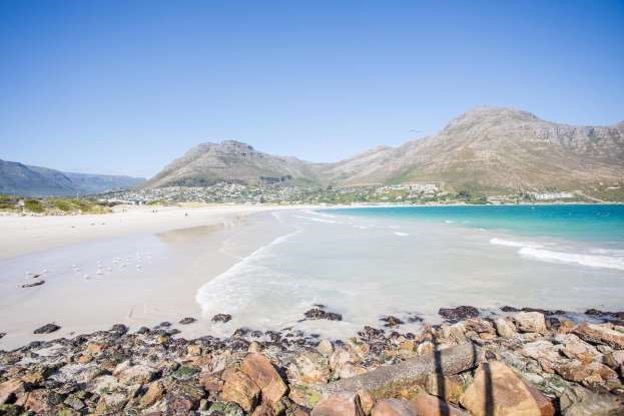
Each of our apartments comes fully furnished and decked out with luxurious amenities and furniture, handy, top quality appliances and of course, safe, secure on-site parking and 24-hour security.
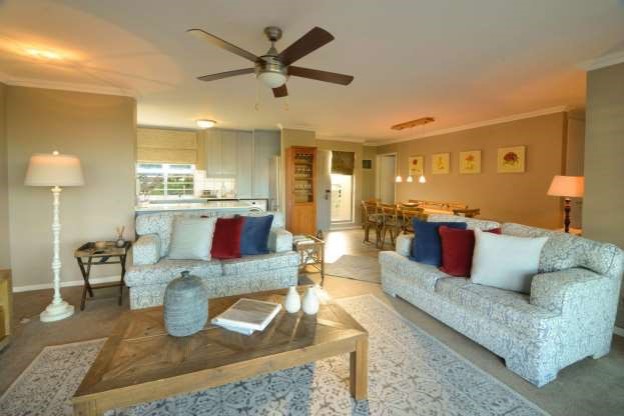


You can choose from our three-bedroom Harbour View Apartment; our two-bedroom The Boardwalk Apartment; or even our one-bedroom Riverview Apartment.
Each apartment comes with its own style, beauty and attractive views and amenities to enjoy.
Just don’t delay as bookings are likely to fill up fast in preparation of the big race day!
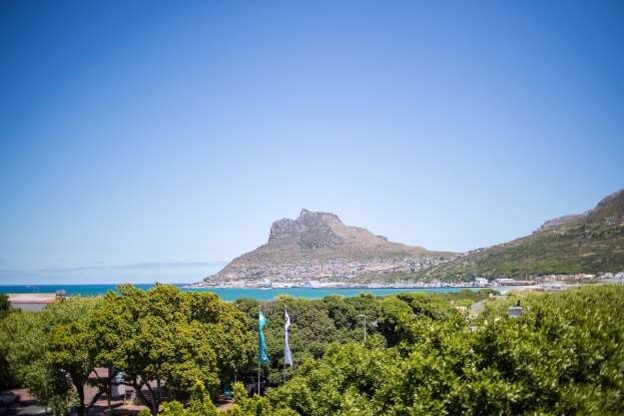
To book your stay with DK Villas, please select the relevant ‘Accommodation’ tab under our website: www.dkvillas.co.za.
